
Articles
What a clearance product page needs to say
Turn a stock record into a useful product page with clear condition, contents, availability and dispatch details.
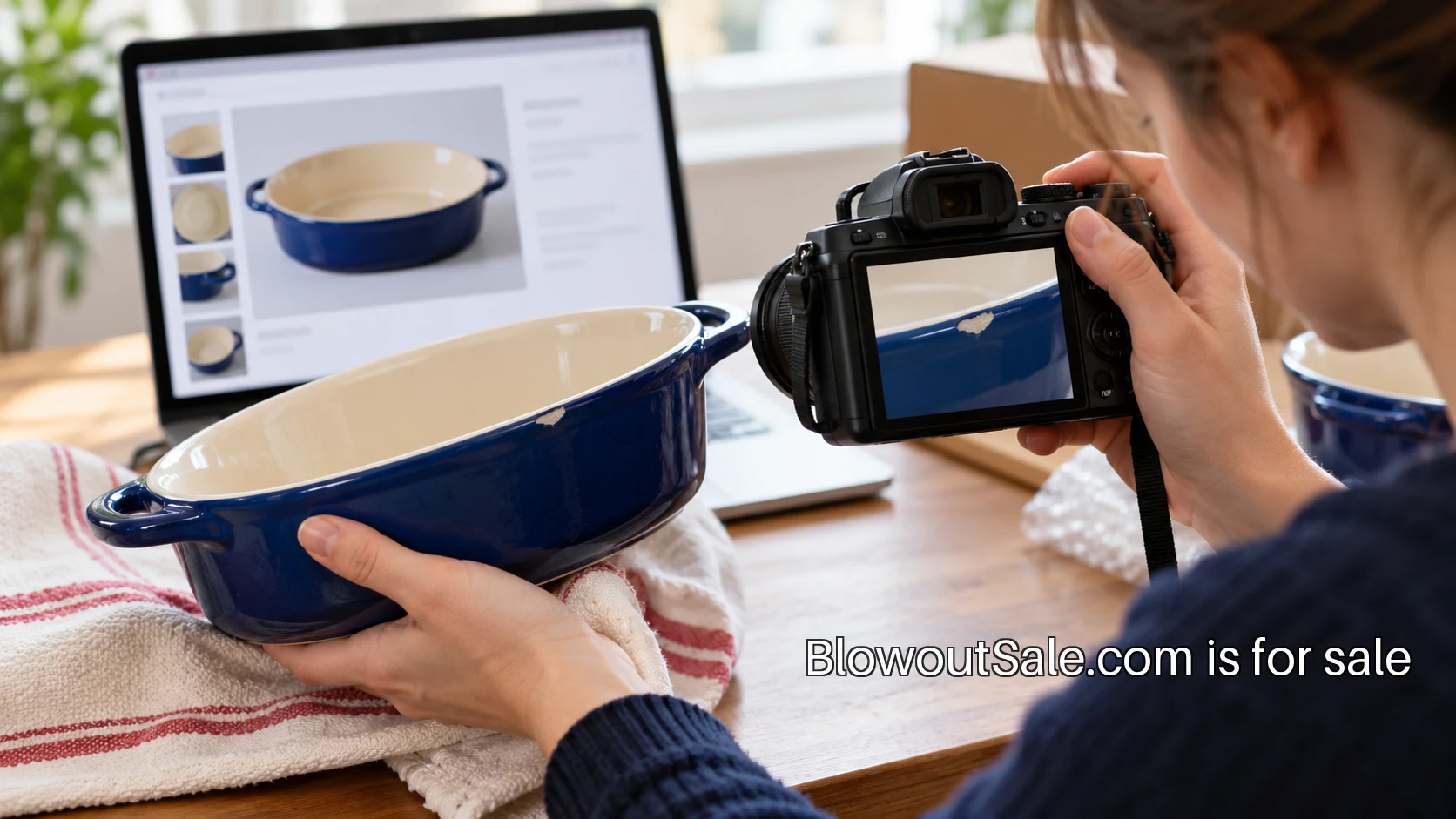
A clearance product page has a precise job: describe the item being offered well enough for someone to decide whether it fits their needs. The discount is only one part of that decision. Dimensions, contents, condition and delivery details can matter just as much, particularly when a range includes open boxes or stock with different packaging standards. Good page writing begins with a checked product record.
The approach below treats the page as a practical handoff between buying, inspection, catalog and dispatch. The examples are illustrative. Use them to identify the questions your own products need to answer, then write from evidence gathered for the actual item. A useful page should remain understandable even after the promotional headline has been removed.
Name the item before describing the offer
Begin with a title that identifies the product, model and meaningful variation. If two items differ in capacity, dimensions or included parts, the title or variation selector should make the distinction clear. A stock code can help the team trace the listing, but it should sit alongside a description a reader can understand without access to the warehouse system.
Keep the title compact enough to scan. Move secondary details into the specification area rather than trying to place every fact in one line. For an illustrative storage unit, the title could identify its type and size, while the body lists material, measurements and assembly contents. That division gives both the reader and the catalog editor a clear structure.
Say what condition means on this item
A general condition label needs supporting detail. If a box has been opened, state what was checked and what is included. If there is cosmetic wear, describe its position and show it in a photograph. If the outer packaging is damaged but the product is unaffected by that damage, record those two observations separately. Write only what the inspection supports.
Avoid letting a grade such as “A” or “excellent” do all the work. Even with a published grading guide, an individual product may have a detail worth stating. “Small mark on the left rear corner” gives the reader a location to inspect in the images. Consistent specific descriptions also give the support team a record to refer to if a question arrives later.
For stock with individually different condition, decide whether each unit needs its own listing or a selectable unit reference. A single group photograph can be unsuitable when the customer will receive one of several visibly different items. The page structure should follow the actual stock arrangement, so the photograph and the offered unit stay connected.
List the contents, including the small parts
Write an included-items list from the checked contents, not from a generic manufacturer description copied without review. Accessories, fittings, leads, lids and instructions may affect how someone uses the product. If something expected is missing, place that information close to the contents rather than burying it in a general paragraph near the bottom.
For a set, state the number of pieces and identify them. For an item requiring assembly, describe the supplied components and direct readers to the relevant instructions where available. A photograph of everything laid out can support the written list. It is especially useful when several similar models have different accessory packages.
Give measurements a clear reference point
State dimensions in a consistent order and name that order. Explain whether the measurement is for the product, the assembled unit or the packaged item. A buyer comparing a shelf with a space at home needs product dimensions; a delivery question may concern the package. Keep those fields separate so one number is not made to serve two different purposes.
When fit matters, provide the additional measurement that answers the fit question. A drawer organizer may need internal compartment measurements, while a table may need clearance beneath the top. Photograph the relevant point when that makes the information easier to understand. The writing task is to help someone compare the product with their actual use, rather than fill a specification table for its own sake.
Make photographs match the listing
Use a main image that clearly shows the offered product and a sequence that covers relevant sides, details, contents and condition. Keep the lighting consistent enough that color differences are not caused by the photography. If a photograph shows a representative unit rather than the exact unit, make that relationship explicit where it affects the offer.
Add detail photographs for defects and included accessories. Keep the reference number connected to the image files so an editor cannot accidentally use the photographs for a neighboring model. A tidy naming convention and a final comparison with the stock record can prevent a page from describing one variation while showing another.
Keep availability attached to the real quantity
A page should have a current stock status that reflects the units actually available for orders. Decide which system owns that number, how an order reserves it and how cancellations return a unit to availability. For a small outlet, this can begin with a simple disciplined process. The important part is that every sales channel follows the same process.
If products can also be bought from a physical shelf, include that movement in the stock routine. Work through a single example: a unit is picked up in the shop while an online order is being placed. The team needs a defined way to resolve and record the change. That operational decision belongs behind a clear, current availability statement on the page.
Describe dispatch from the operation you run
Tell the reader what the dispatch arrangement is for this product. A small parcel and a bulky collection item need different information. State whether collection is available, where any collection instructions appear and what the buyer needs to arrange. Keep product-specific delivery details close to the purchase controls rather than relying only on a general help page.
Use a schedule the packing team can support, and distinguish dispatch from arrival. If an item requires a special handling arrangement, explain the steps in ordinary language. Before publishing, pack a sample and check the parcel information. A page is easier to maintain when the dispatch details come from a repeatable physical process.
Answer questions in the place they arise
If shoppers repeatedly ask whether an accessory is included, improve the contents section. If they ask about a scratch, add a clearer condition photograph. Repeated questions are useful editing signals. Save them against the product or category, then update the shared page template only when the lesson applies to other items as well.
Keep the original product record and a history of material page changes. If the available stock changes condition or contents, review the page before using it for the new batch. A familiar product name does not guarantee that the next clearance lot is identical. Treat each arrival as an opportunity to confirm what the page says.
Run one final reader check
Ask someone who did not write the page to identify the product, its condition, its contents, its quantity status and the dispatch arrangement. Note where they need help. Then compare every statement with the inspection record and the actual stock. That review catches gaps a writer can overlook after spending a long time with the same item.
The finished page should give the catalog, support and packing teams one consistent description of the offer. Start with a checked product, write the details in a predictable order and revise from real questions. The practical result is a listing that can stand on its own, with the information someone needs to choose the item and understand what will arrive.
A name for the clearance destination you have in mind.
Ask about acquiring BlowoutSale.com or describe a potential partnership.